
Cabinet Cooling and Thermal Management
We bring heat management into the cabinet layout from the start. Equipment losses, ambient conditions and available cooling services guide the method, while airflow, openings and maintenance access shape the installation.
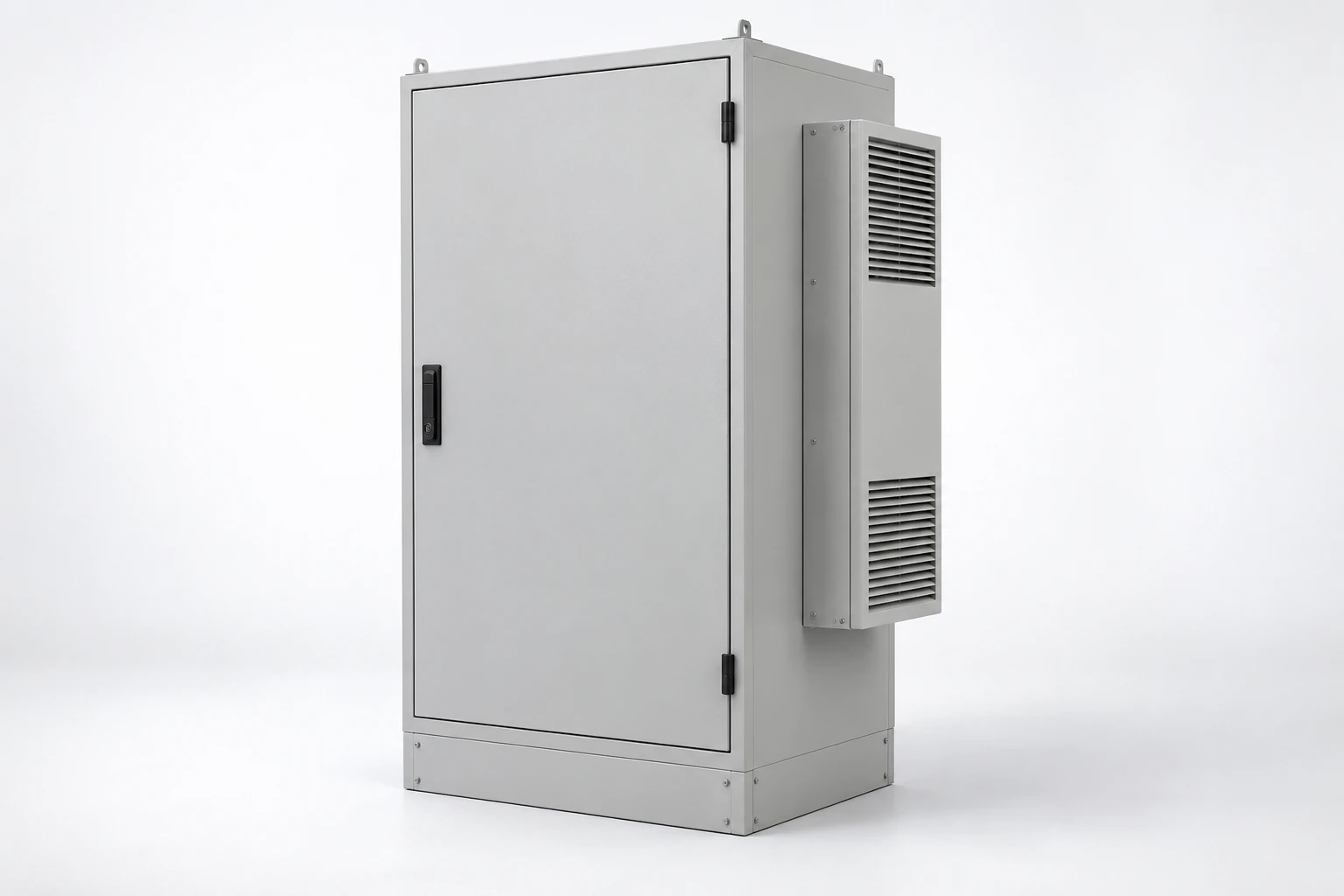
We coordinate cooling requirements with the enclosure and electrical layout. The selected cooling equipment, operating conditions and control interfaces form part of the project configuration.
Start with the equipment operating conditions
We begin with the components inside the cabinet and the temperatures they can tolerate at the intended duty. A drive, power supply and control device may have different temperature limits, so the arrangement needs to protect the limiting component as well as the general cabinet space.
Ambient minimum and maximum, sunlight, nearby heat sources, altitude and contamination help define the operating conditions. Air at a cooling-device inlet can be warmer than the surrounding room. Startup, standby and peak process modes also matter when their heat generation differs substantially.
Build the heat budget from component losses
Heat loss and output power
We use heat dissipated inside the enclosure, expressed in W or BTU/h. A device's electrical output power does not equal its cabinet heat loss: the loss depends on efficiency, loading and operating mode.
Duty and simultaneous operation
The equipment schedule identifies which components operate together and for how long. This makes intermittent operation and future additions visible without applying an arbitrary reduction to every load.
| Input | How we use it |
|---|---|
| Component model and quantity | Connect loss data to the installed equipment |
| Load and operating mode | Identify simultaneous and intermittent heat |
| Loss value and units | Calculate heat released into the cabinet |
| Layout and surroundings | Account for blocked surfaces, sunlight and nearby heat |
Compare the cooling methods for your site
| Method | Suitable thermal condition | Main interfaces |
|---|---|---|
| Filtered ventilation | Ambient air cooler than the required internal temperature; usable air quality | Inlet, exhaust, fan supply and filters |
| Air-to-air heat exchanger | Useful temperature difference between warmer cabinet air and ambient air | Separated internal and external airflow paths |
| Refrigeration | Active cooling within the equipment operating range | Electrical supply, heat rejection and condensate handling |
| Air-to-water heat exchanger | Cooling water with suitable temperature and available capacity | Water supply, flow, pressure, quality and controls |
A control cabinet fan moves air; it does not refrigerate it. An air-to-air exchanger needs a temperature difference, while water cooling depends on a suitable external cooling-water system. We discuss these conditions before assigning space to a cooling device.
Select performance at the real operating point
Cooling capacity changes with operating conditions. We relate the component heat budget to performance at the proposed internal and external temperatures, rather than selecting solely from a nominal capacity label.
For a control cabinet air conditioner, the electrical input and heat rejected into the surrounding area also affect the installation. A water-assisted arrangement brings inlet temperature, flow and water quality into the same selection. Identifying future heat loads separately keeps the expansion requirement clear and helps avoid choosing extra equipment that the available services cannot support.
Carry heat away from the components that produce it
Heat moves from components into cabinet air and surfaces, then through the selected cooling interface to ambient air or a water system. We coordinate that path with shelves, wiring ducts, door devices and neighboring cabinets.
Supply and return paths
Air needs a clear route through the equipment zone. A nearby return opening can allow cooled air to bypass the parts that need it, while a shelf can isolate a hot region.
Sensor positions
Temperature measurement should reflect important equipment locations. A favorable average reading can conceal a local hot spot, so sensor positions belong on the layout alongside airflow directions.
Connect cooling power and temperature feedback
We coordinate the selected cooling equipment's voltage, phase, frequency and electrical demand with the cabinet supply. Running current, startup demand and protective-device requirements influence that connection.
The control interface can include local temperature indication, fault contacts or project monitoring signals. We discuss these with the control team so a temperature alarm has a defined meaning and response. Cooling-power loss, blocked airflow and loss of water service create different conditions; the process designer determines the appropriate warning, operating restriction or shutdown logic.
Integrate cooling with materials and moisture control
Openings and fixing points need to suit the cooling device's weight and the enclosure construction. Metal surfaces, heat-exchanger materials and seals also need to suit dust, cleaning chemicals, corrosion exposure and any water service.
Cold surfaces can fall below the dew point and collect moisture. We include humidity, condensate routes and drainage access in the layout discussion. Water-circuit connections need room for inspection and service; their position should reduce the chance of moisture reaching electrical equipment. These details connect thermal performance with the final cabinet's environmental protection.
Keep thermal configuration documents aligned
Our project configuration brings together the load assumptions, ambient conditions, selected cooling accessories, temperature locations and alarm interfaces. The enclosure drawing and control documents should refer to the same equipment arrangement.
Agreed thermal checks need meaningful load and ambient conditions, with measurement positions recorded so results can be interpreted. Alarm checks follow the defined control responses. The project scope identifies the documentation and checks included with the cabinet and those associated with site integration; this makes the handover useful to the team operating the equipment.
Leave practical access for routine care
We consider access to filters, fans, heat-transfer surfaces and condensate-related parts while arranging the cabinet. Clearance for removing a filter or opening a service panel can determine where the cooling device fits.
Routine care follows the selected equipment's instructions. Intrusive electrical, refrigeration and liquid-system work belongs to qualified personnel. Temperature trends and recurring alarms help the operating team recognize changing conditions. Adding equipment, increasing process duty or moving the cabinet to a hotter location should trigger a review of the original heat budget and cooling arrangement.
Discuss your cabinet heat load with us
Start with the equipment inside the cabinet, the operating environment and the available installation space. We can use those details to discuss suitable cooling approaches and develop the remaining thermal inputs.
If available, send component loss data, a layout, permitted temperatures and details of electrical or cooling-water services. Quantity, destination and access constraints help us connect the thermal configuration to the wider cabinet project.