
Meter Box Doors and Replacement Parts
We help you match door, frame, hinge, latch and seal requirements to the existing meter enclosure. Our discussion starts with the box reference and the details that connect the replacement part to the surrounding assembly.
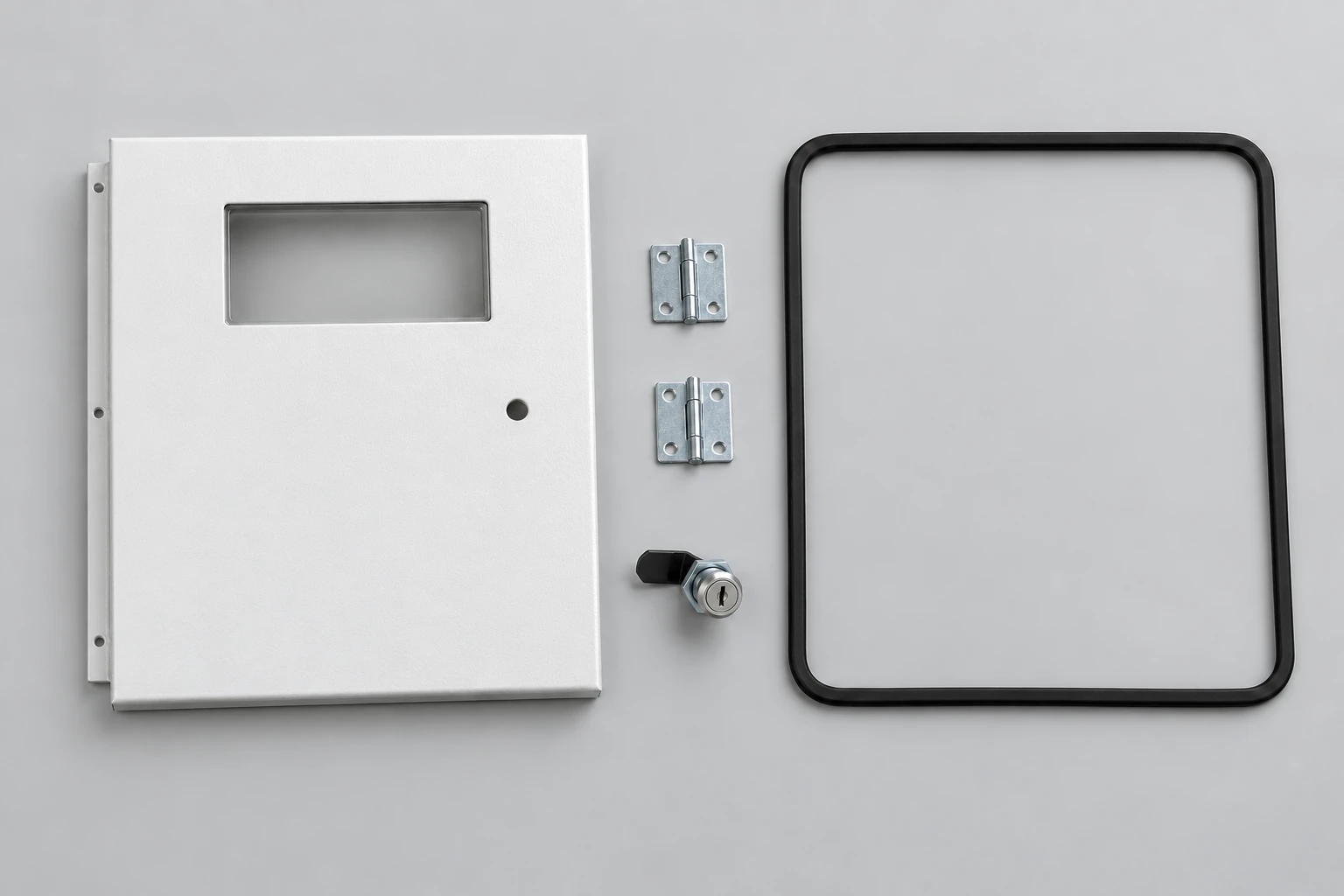
We bring the required part, mating features, finish and quantity together in the project proposal. Existing drawings and accessible exterior details help us identify the configuration before agreeing the supply scope.
Our parts matching approach begins with the component
A door, frame and small hardware item each meet the enclosure in a different way. We start by identifying the required component and the condition of the surrounding structure, then focus on the features that govern fit.
| Part group | Our matching focus |
|---|---|
| Door or cover | Opening, hinges, latch and edge overlap |
| Frame or surround | Existing box, wall interface and fixing positions |
| Overbox or repair cover | Remaining structure, added depth and access |
| Hinges, pins or latches | Part reference, mating geometry and included hardware |
| Seals and entry accessories | Profile, opening and adjoining surfaces |
For damage extending beyond the part, we also discuss whether the project needs a complete enclosure.
We use the existing enclosure to identify the replacement
The maker, model, part number and drawing revision help us distinguish enclosure variants. An original purchase record can be especially useful when two doors look alike but use different hinges or latches.
Exterior details that help the conversation
A front view, visible hinge side, latch area and external label show how the part meets its frame. We use existing drawings and safely accessible exterior information; meters, seals and protected electrical covers remain in place. Details that need internal access are handled through the utility or a qualified assessor's authorized survey.
Our dimensional comparison uses a common view and datum
We describe dimensions from the same viewing direction, normally facing the closed enclosure. A stated datum, such as the top-left outside corner, connects the measurements to the drawing. Overall size and the clear opening then remain distinct.
| Reference | Feature | How it affects fit |
|---|---|---|
| A / B | Overall width / height | Door or frame footprint |
| C / D | Clear opening width / height | Opening covered or surrounded by the part |
| H | Hinge centres and handing | Axis and direction of opening |
| L | Latch centre and cutout | Engagement with the mating frame |
| O | Overlap at each edge | Relationship between the cover and surrounding surfaces |
We keep mm or inch units explicit and distinguish measured values from dimensions taken from an existing drawing.
We match the hinge and latch as connected mechanisms
Hinge count, centre spacing, pin arrangement and handing determine how the door opens and locates against its frame. We use the stated front view to distinguish left and right, then compare the hinge detail with the enclosure reference.
The latch needs the corresponding cutout, engagement position and mating feature. We also identify pins, retaining pieces, fasteners, keys and seals within the requested parts set. Considering these pieces together helps the proposed replacement close and align as intended, with any retained hardware identified in the project discussion.
Frames and overboxes change the enclosure interface
A replacement frame connects to both the box and the surrounding wall. Its fixing pattern, overlap and edge geometry therefore matter alongside the opening dimensions. We compare those interfaces to understand how the new part will sit.
An overbox adds another layer around the existing enclosure. Its depth can change the door position, latch access and room around cables or adjacent structures. We consider meter visibility, ventilation features, seals and the applicable bonding arrangement with the project team. The condition of the retained structure determines whether that approach is suitable for further discussion.
We coordinate finish, seals and hardware with the intended use
Body material and finish
We discuss the required appearance alongside corrosion, sunlight and impact exposure. Material and finish affect the part's stiffness, weight and interaction with the retained frame.
Seals and moving parts
A seal's profile and elasticity influence how it contacts the mating surfaces when the door closes. Hinge pins, latches and fasteners also need material and surface protection suited to their exposure. We use the original reference and mating details to discuss these choices rather than treating color as the matching criterion.
The parts schedule identifies the selected pieces and their quantities as a coordinated set.
We align drawings and samples for repeat requirements
For a repeated requirement, we connect the existing enclosure reference to the proposed part drawing and its critical dimensions. Hinge, latch and overlap details give both teams a clear basis for resolving a fit question.
Where a project calls for sample evaluation, we agree the sample scope, fit characteristics and responsible review with your team. Feedback on a particular edge, hole or mating feature can then be linked to a drawing revision. This keeps the final parts discussion tied to the actual enclosure variant and any agreed configuration changes.
Our replacement discussion considers the surrounding box
A door or hardware replacement focuses on the part and its mating features when the existing enclosure remains suitable. Damage to the body, support or electrical equipment introduces a wider project question that needs the corresponding assessment.
We use that distinction to discuss the appropriate equipment scope with you. Our meter-box range provides the route for a complete enclosure, while our replacement and maintenance information explains the related project interfaces. A change in enclosure size or location also connects to the building and service arrangement.
We organize the parts set for delivery and identification
We discuss packing around door corners, finished surfaces, viewing windows and loose hardware. The parts list identifies the supplied pieces and quantities so the receiving team can connect each item with the agreed replacement arrangement.
Part references and the relevant drawing keep later questions specific to the delivered set. We coordinate the requested instructions and document scope with your team, while the site's authorized personnel handle fitting and any associated electrical or utility work. Clear identification also helps distinguish newly supplied hardware from items retained from the original enclosure.
Talk with us about the meter-box part you need
Start with the required part, existing enclosure reference and quantity. Add available outside dimensions and the visible hinge, latch or frame details. Let us know which measurements come from drawings and which were taken from the enclosure.
If photographs or drawings are available, mention them so we can arrange a suitable follow-up exchange. We will use the part and interface information to discuss the proposed fit, material, finish and package contents with you.