Outdoor Meter Boxes
We configure outdoor meter boxes around the conditions at their installation point. Meter interfaces, enclosure materials, door seals and cable entries work together with the mounting layout to support accessible, organized metering outdoors.
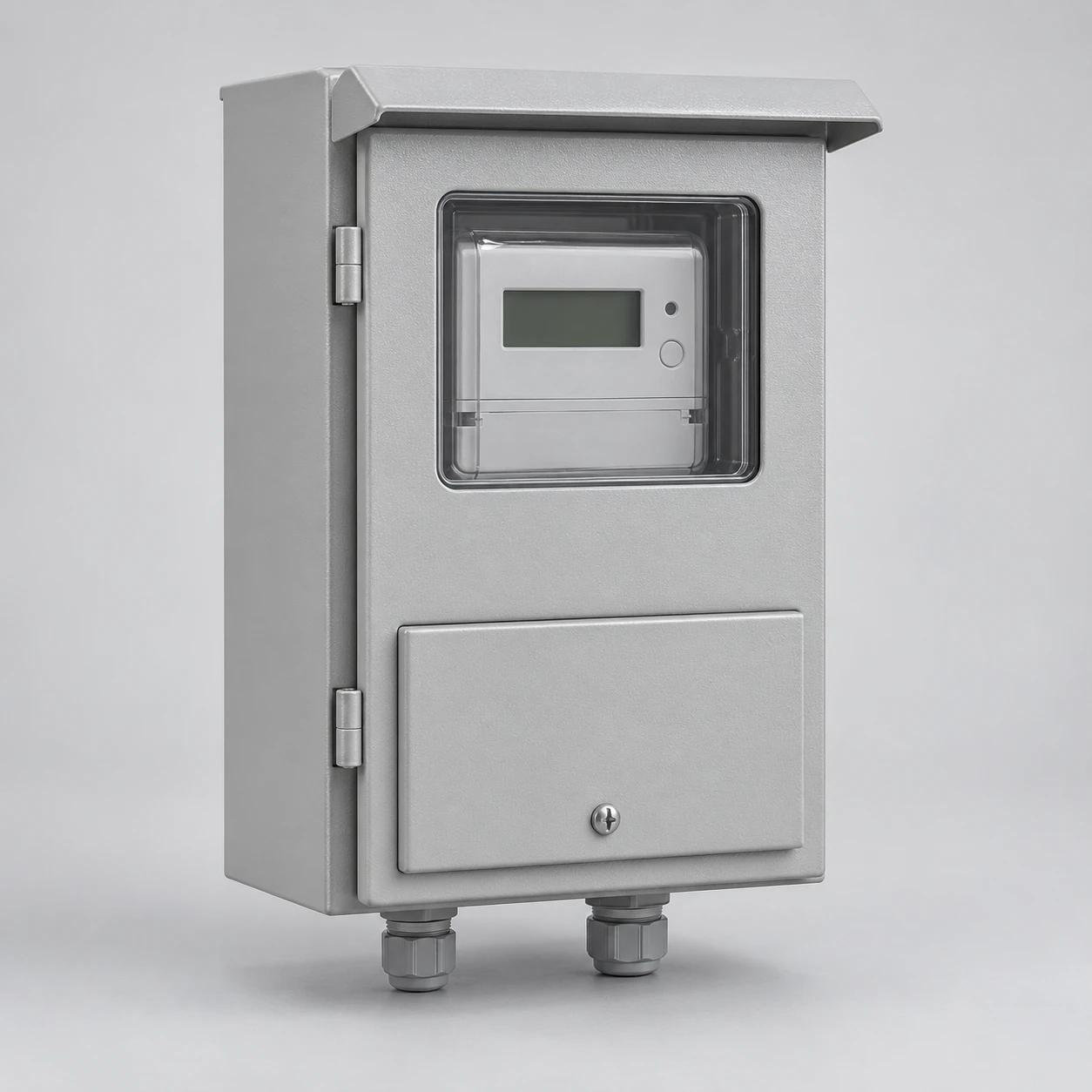
We align the enclosure configuration with the selected meter, service arrangement and site environment. Material, protection designation, accessories and installation details are established together for the project.
Begin with the meter and electrical service
An outdoor enclosure must fit the metering arrangement inside it. We connect the meter form, position count and conductor approach with service voltage, phase, frequency and current requirements. Those details shape the mounting space, terminal layout and cable-entry positions.
Coordinate the complete installation
The serving utility's requirements and the project's electrical arrangement guide the meter and access interfaces. An enclosure-only order and a fitted assembly also involve different components and connection work. Our electric meter boxes overview explains those arrangements, which we then coordinate with the particular outdoor location.
Adapt the configuration to the actual exposure
Sheltered walls
A canopy can reduce direct rain while leaving wind-driven moisture, wall runoff and temperature changes to consider. We discuss where cables approach and how water may travel around the mounting surface.
Direct sunlight and open locations
Sunlight adds heat to the enclosure, while rain, dust and nearby washing affect seals and entry details. The ambient temperature range and surrounding equipment help describe the operating environment.
Coastal and industrial sites
Salt, pollutants and cleaning agents influence material and finish choices. Maintenance access also matters: an enclosure that is difficult to reach may make routine external inspection and cleaning less practical.
Define protection around the completed enclosure
We discuss protection requirements in relation to the enclosure with its doors, cable entries and accessories fitted. IP classifications and NEMA or UL Type designations are different systems, so they are not directly interchangeable. Weathering, corrosion and fire-related requirements also address different properties.
| Project condition | Configuration relationship |
|---|---|
| Rain and dust | Door closure, gasket continuity and completed entries |
| Sunlight and temperature | Material behavior and internal thermal conditions |
| Corrosive exposure | Base material, finish, edges and compatible hardware |
| Fire-related requirement | Specified material, enclosure or building-system requirement |
| Metering access | Utility interface, sealing and permitted operating areas |
Compare materials by how they perform at the site
We relate material selection to strength, mass, corrosion exposure and the planned construction. These comparisons help define a suitable project specification without relying on a material name alone.
| Material approach | Useful characteristics | Details to coordinate |
|---|---|---|
| Coated metal | Structural shell with a protective surface finish | Substrate, coating, cut edges and prepared openings |
| Corrosion-resistant metal | Material resistance suited to the exposure | Grade, surface condition and mating hardware |
| Polymer construction | Lower mass and electrically insulating material | UV, temperature and mechanical behavior |
| Seals and entry accessories | Continuous closure around doors and cables | Material aging, fit and replacement identity |
Balance sunlight, internal heat and moisture
Solar exposure and heat from installed equipment both contribute to the conditions inside a meter box. We consider them alongside ambient temperature and the limits of the selected meter and other components. A shaded wall and an exposed wall can therefore call for different thermal discussions.
Account for temperature changes
Condensation can occur when moist air meets a sufficiently cold surface. Daily temperature cycles, local humidity and moisture paths influence that risk. Any proposed ventilation, heating or other moisture-control measure must be coordinated with the enclosure and electrical arrangement. These accessories are configuration choices rather than a single treatment for every outdoor box.
Make doors and cable entries work together
We coordinate the number, direction and size of cable or conduit entries with the enclosure layout. Matching glands, hubs, seals and unused-opening closures helps maintain continuity around the entry area. Cable outside diameter is therefore as relevant as conductor size.
Keep closure geometry consistent
Hinges, latches and the door frame position the gasket when the box closes. The compression and contact arrangement influence the seal, while service access determines how those parts can be inspected or replaced. New openings or different hardware change the completed construction and belong in the configuration discussion, including the relevant protection requirements.
Provide clear reading and service access
We discuss mounting position together with meter visibility, door swing, cable approach and the surrounding space. A deep reveal, planting or nearby equipment can obstruct access even when the enclosure fits the wall.
Coordinate the mounting format
Our surface-mounted boxes and recessed boxes involve different wall and projection details. Either format still needs the site's outdoor conditions considered. Utility and project access requirements determine the appropriate location and clearance, while the mounting surface and fixing arrangement must support the selected assembly.
Our outdoor configuration details follow the project layout
We bring the general arrangement, material specification, meter interface and entry schedule into one coordinated configuration. The accessory list connects seals, closures and mounting hardware with their intended locations, helping changes remain consistent across the drawings.
Protect the details through delivery
Packing and storage planning address projecting parts, doors, finishes and loose accessories. Component identification helps the receiving team relate the delivered parts to the layout. Installation and the required checks then follow the selected equipment instructions and utility arrangement, with final changes carried into the project records.
Plan care and replacement-part identification
External condition can reveal useful maintenance information: impact damage, a door that no longer closes evenly, deteriorated seals or signs of water exposure. Routine observations follow the equipment instructions, with abnormal conditions referred to authorized personnel.
Keep the mating parts identifiable
A door, gasket, latch or cable-entry part needs to match the construction around it. We use component references and layout details when discussing replacements or modifications, so fit and enclosure requirements can be considered together. Our meter-box parts page explains the information useful for that discussion.
Discuss your outdoor installation with us
Tell us where the meter box will be installed, which meter arrangement it needs and the main environmental conditions. A sheltered wall, a sun-exposed location and a coastal site each provide a different starting point. Include the approximate enclosure space and quantity.
We can then develop the discussion around cable entries, materials, mounting and access. Site sketches and relevant drawings can be exchanged as the configuration progresses. Bringing electrical and environmental details together helps the final arrangement fit both the meter and its everyday operating location.